Contents
The quote that stopped the scroll
Official Report
To ask the Minister for Health what concrete steps the Ministry is taking to ensure timely reimbursement to health service providers under the NHIS to prevent future disruptions that directly impact vulnerable citizens.
Kingsley Agyemang, Abuakwa South
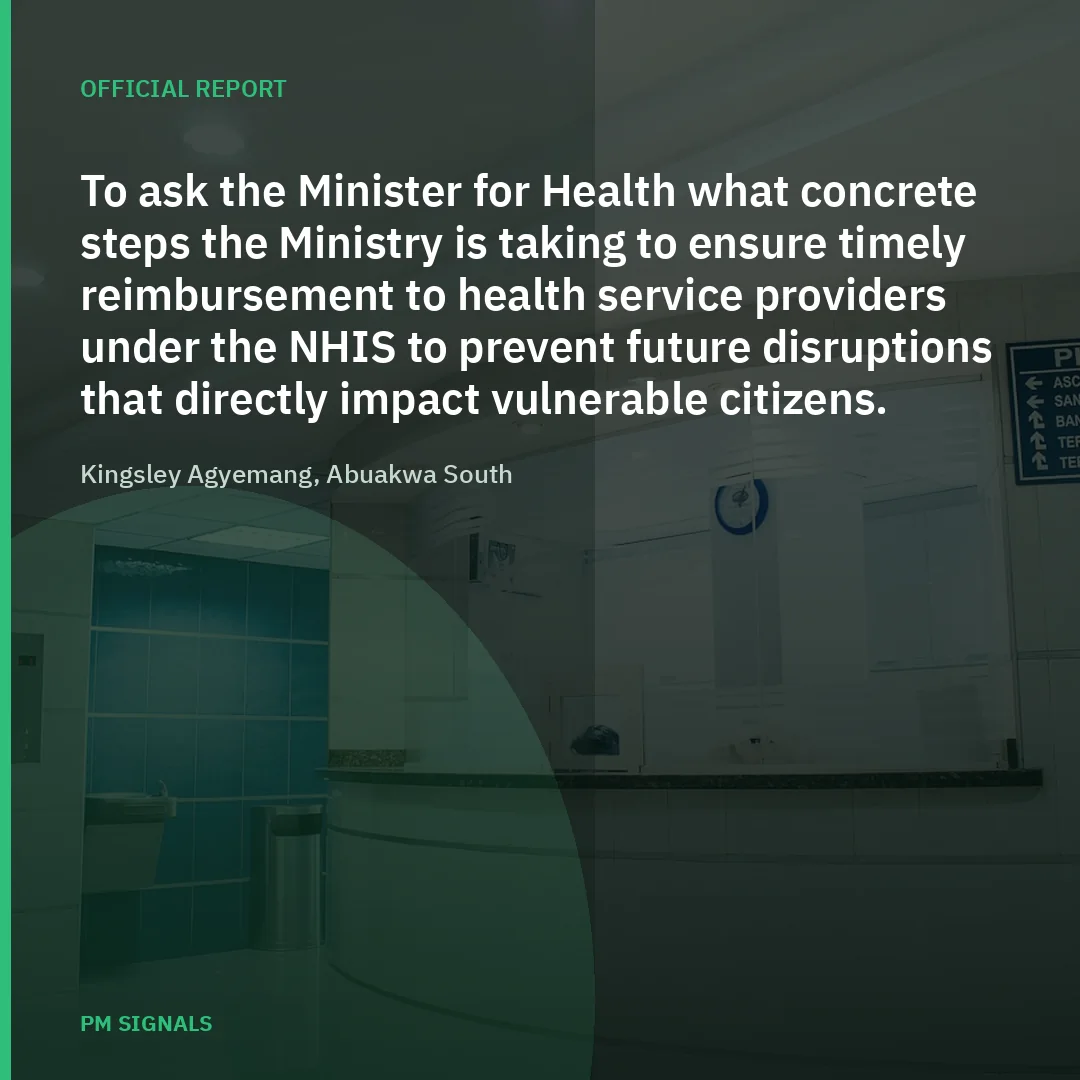
Dr Kingsley Agyemang (Abuakwa South) asked what concrete steps will make NHIS reimbursement to health service providers timely enough to stop disruptions for vulnerable citizens.
Question 152 is on the Business Statement. The Member for Abuakwa South tied delayed NHIS reimbursement to disruptions that hit vulnerable citizens: the claims fight people already know from hospital queues.
What the record reveals
The Business Statement lists Question 152 from Dr Kingsley Agyemang (Abuakwa South) to the Minister for Health. The Question asks what concrete steps the Ministry is taking to ensure timely reimbursement to health service providers under the NHIS to prevent future disruptions that directly impact vulnerable citizens. The 24 July Official Report does not state current arrears, average days-to-pay, or the Minister's answer.
System analysis
NHIS is a claims engine: encounter capture, vetting, fraud control, treasury release, and provider liquidity. When reimbursement lags, facilities ration, refer, or ask patients to pay. The users named in the Question are vulnerable citizens; the operators are the providers waiting on the cycle.
Market gap
The record supports investigating claims-cycle infrastructure: faster digital claims, working-capital facilities secured on verified invoices, audit tools that do not freeze honest providers, and visibility for facilities on where a claim sits. The sitting does not prove arrears size, NHIA procurement, or a commercial buyer. Those remain open.
Execution blueprint
Wait for the ministerial reply before treating any arrears figure as fact; map the claim lifecycle from ward to NHIA to bank; speak with a mix of CHAG, public, and private providers plus NHIA operations; prototype status-tracking and a receivables product only if invoice data is actually available; then test whether the buyer is the provider, a bank, or the scheme itself.
What to investigate next
The Minister's reply and any days-to-pay figure; NHIA or Ministry budget for claims; provider strike or service-disruption reports after this sitting; and Question 157 on the same list, which asks why Ghanaians including senior officials seek specialist care abroad.
💬 Leave a Reply
Your email address will not be published. Required fields are marked *